Convergence
by ValerijsThe alarm hits without warning. Unidentified objects appear on the radar, and the operators stare at the screen in silence for a few seconds, trying to understand what exactly is approaching the city.
No identification? – No. No military unit is claiming them. The answer comes too quickly. That alone is enough to show the situation has already moved beyond protocol. Deploy regular forces. – Impossible. They’ve been transferred to another continent. – How quickly can we bring them back? – Four to six hours. A pause settles over the room. Four hours, in a situation like this, is too long. Then what do we do? – Inform command. A brief delay follows, then the voice lowers. And… prepare the test subjects. Most likely, we’ll need them.
A few minutes later, phones begin vibrating one after another. The message reaches each member of the group almost at the same time: Emergency assembly. Report to the center immediately. Tell your parents you are leaving for a training camp. Come as quickly as possible. The wording is dry and official, but to them it sounds like a summons. No one sends unnecessary questions. The urgency is clear at once. This is no longer a training notification or a scheduled exercise.
When the dragons arrive at the center, they enter the briefing room. The instructor and the cyberpsychologist are already waiting for them. For several seconds they simply look at the group, then the briefing begins. The dragons are told that today the leadership has decided to admit them to their first mission. A virtual one. Their task is to defend the city from an attempted attack. To them, it does not sound like an order, but like long-awaited access to a real simulator. For one second the room goes quiet, and then almost all of them react the same way – restrained, but visibly pleased. They have waited too long for this moment to hide how much they wanted a real test.
They are equipped quickly. The gear takes only a few minutes, and by the time preparation is complete, each of them looks ready to step into the mission. The instructor steps forward and explains that during the mission they will act independently. Decisions will have to be made on the spot, without prompts and without waiting for orders from above. The cyberpsychologist adds that the key objective is not simply completing the task, but testing how they make decisions in critical situations.
After the briefing and equipment check, they move toward the city exit.
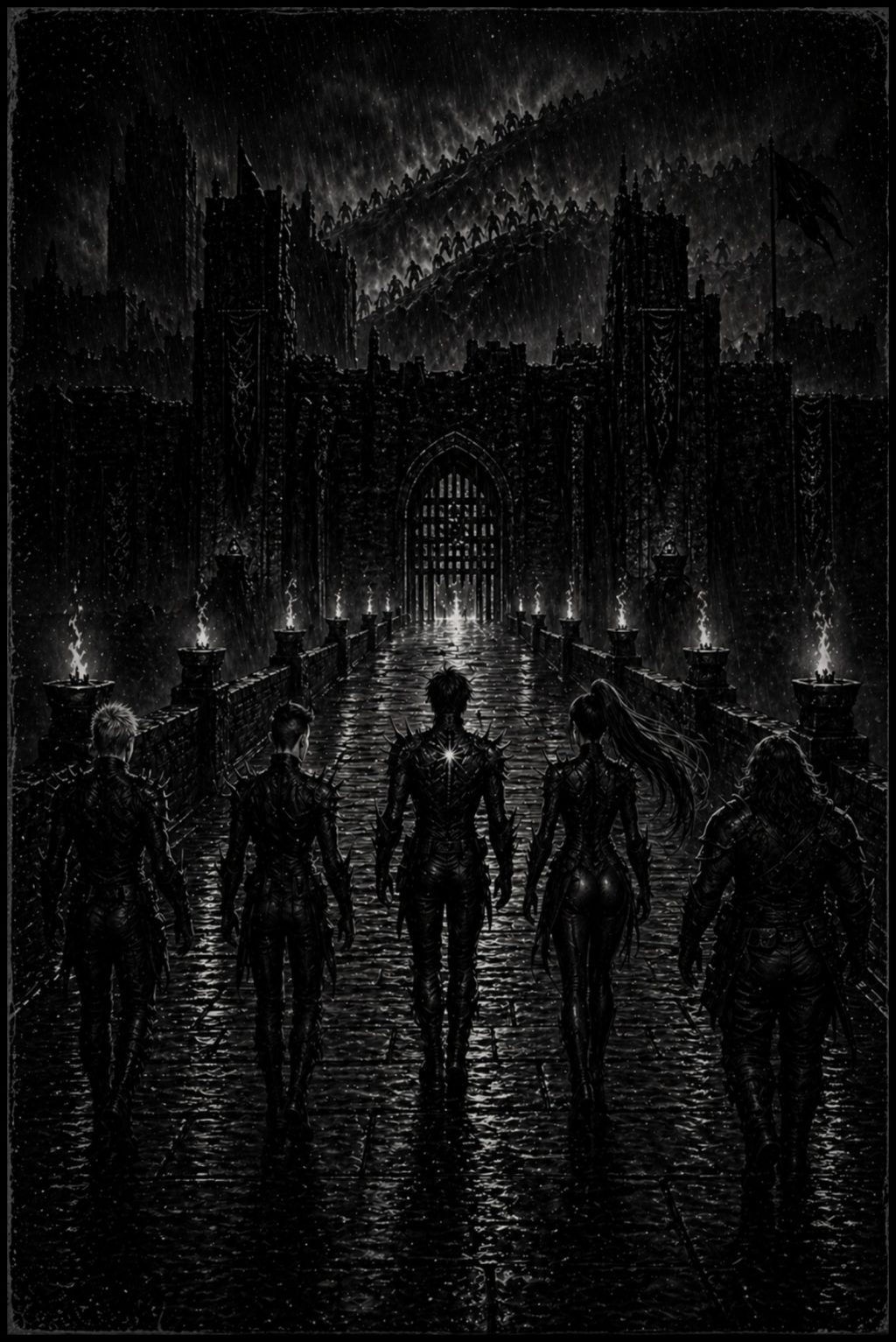
The road runs along the defensive structures – the bridge, the massive barriers, the high wall separating the city from the outside world. Everything looks different now. Sharper. More real. They do not speak. The silence between them is not accidental: each of them already knows their role. And for the first time, each of them feels that the role may be heavier than it seemed in training.
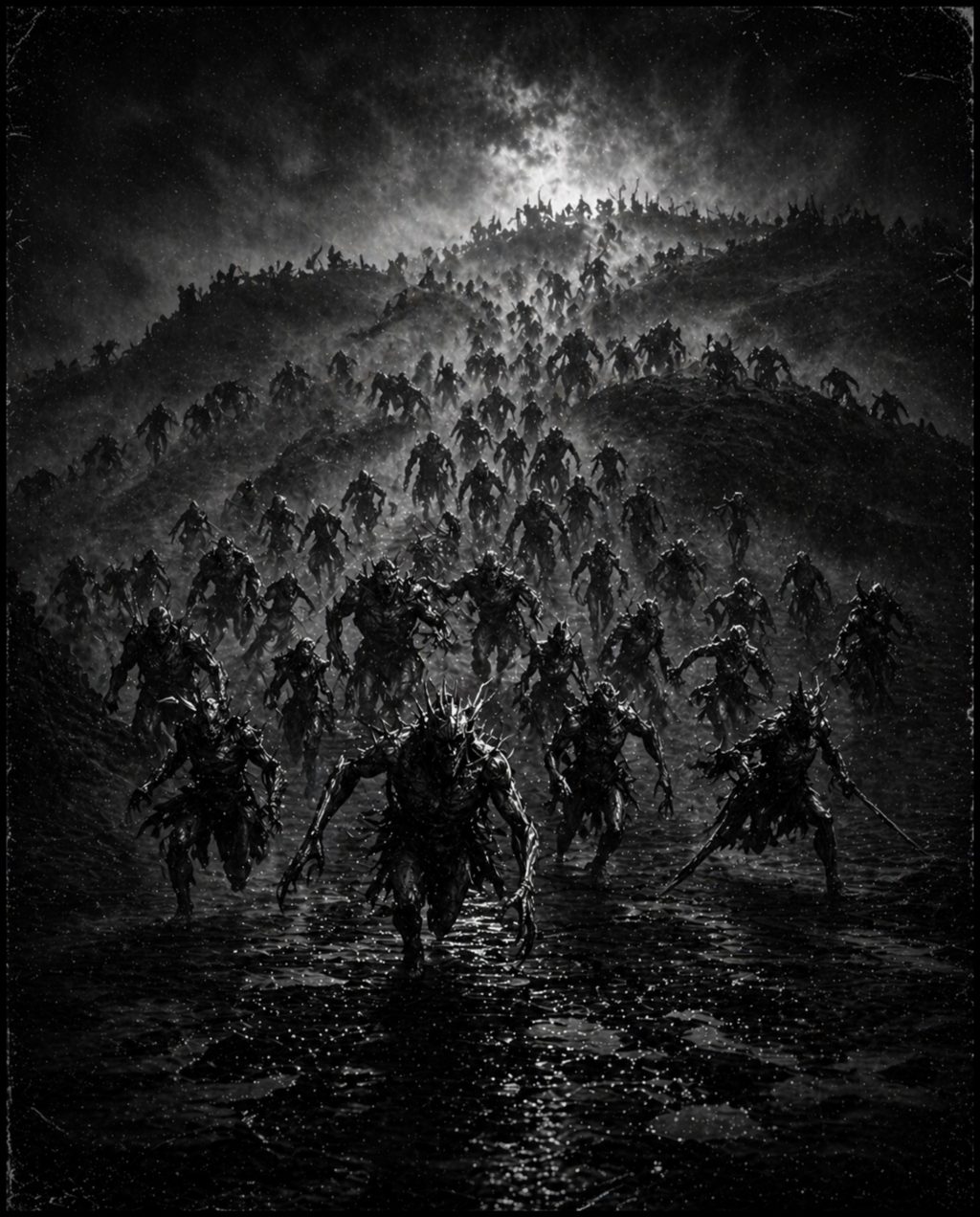
Once they pass through the gates, they see the horde of monsters advancing on the city.
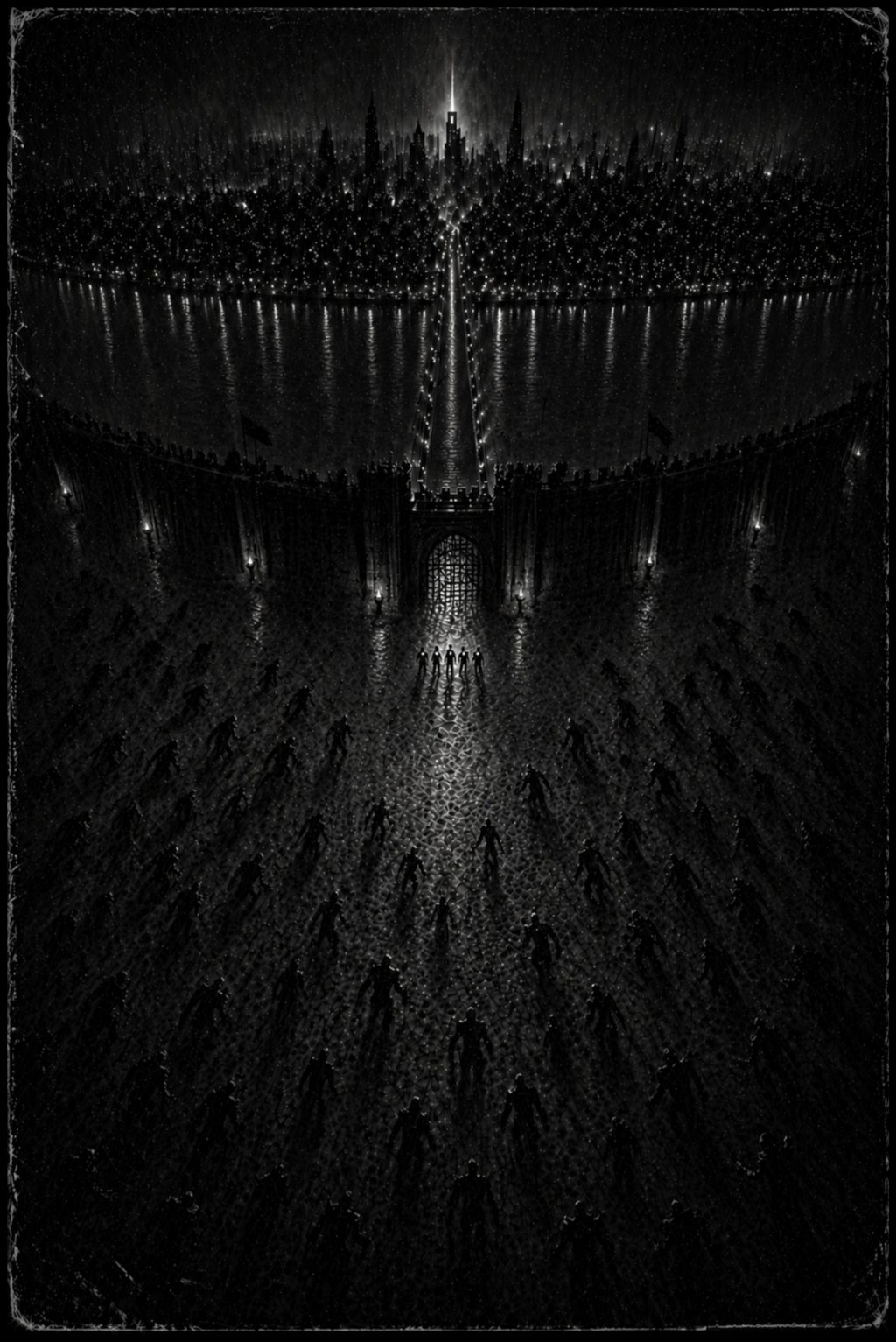
The scale presses down at once: rows of bodies, movement, a low rumble that seems to come not only from outside, but through the ground beneath their feet. Yet there is almost no fear in their reaction. To them, this is still a simulation. A chance to finally show what they can do. Their first mistake happens before the battle even begins: they treat what they see as a test, not as a threat.
They quickly take defensive positions, and Arthur immediately takes control of coordination. His voice becomes focused and firm. Vanessa – forward. Hold the front. Anna – offense. Jekab – perimeter. Don’t let anything get close. Gleb – analyze the situation. I need the best decisions. The team falls into formation almost instantly. Everyone takes their position. Everyone enters their role with the confidence that the scenario has already been calculated.
At first, everything really does go according to plan. The first wave breaks against them, and for several minutes it almost seems as if their calculation was correct. But very quickly it becomes clear that the tactic they had built in their heads cannot survive reality. There are only five of them. The flow of monsters does not end. One falls, another takes its place. Wave after wave, without a pause, without a chance to catch their breath.
They repel the first attack, but the cost becomes visible almost immediately. Everyone has taken some kind of damage. Fatigue builds faster than they expected. Movements grow heavier, reactions slow, mistakes come closer. Arthur notices it first. He is not looking at the number of monsters they have brought down. He is looking at the dynamics of the fight, and he understands that if they stay here, the line will simply break.
He makes the decision instantly. Fall back. Regroup. For a fraction of a second his eyes stop on the team, and then his voice hardens. I’ll cover you. Move. After that Arthur stays in position and draws the main flow onto himself. He still has strength left. Not enough to win – only enough to buy them time.
The four dragons withdraw from the bridge, moving back toward the center. The plan seems simple and clear: reach the safe zone, recover, and return to the fight. Like in a game – recover health, restore energy, and enter the second wave again. They do not yet understand that the game has already started changing its rules.
They move quickly, but without panic, trying to keep pace and hold formation. Halfway across the bridge, movement appears ahead of them. Two figures.
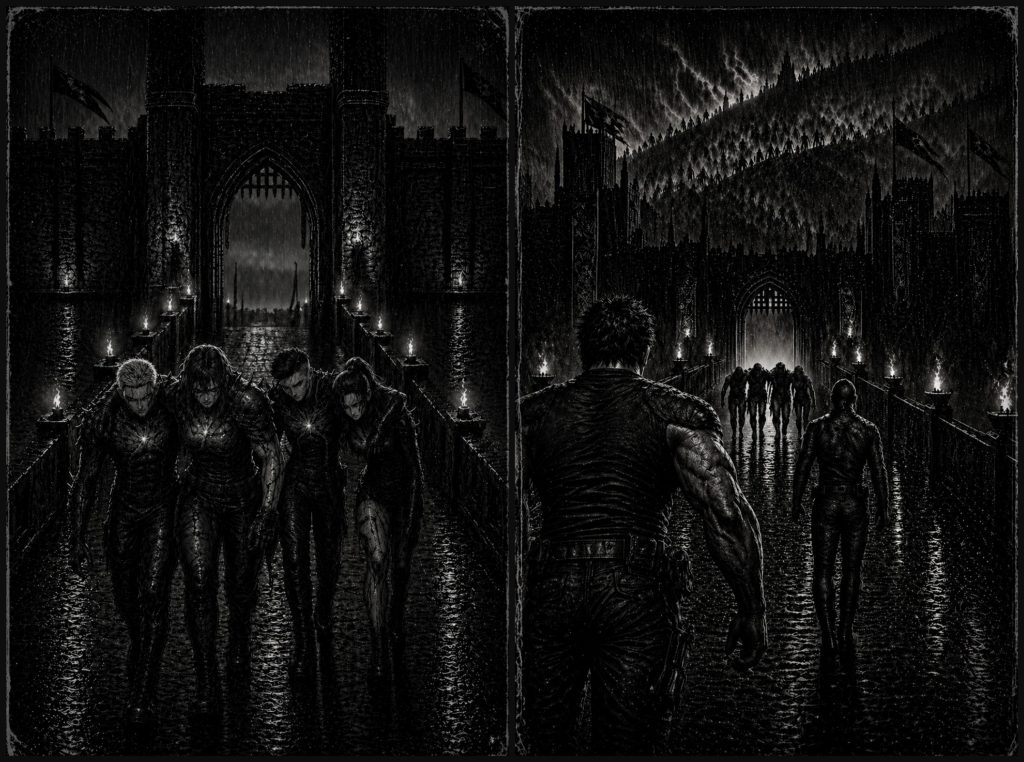
One broad and heavy, his steps calm and certain. The other leaner, his face hidden behind a balaclava. It breaks the logic of the simulation at once. There should be no outsiders in the scenario. For a second the same silent question passes through the dragons – where could anyone else have come from? Vanessa is the first to find an explanation, because right now everyone needs one: most likely they are representatives of leadership, observers sent to assess them during the mission itself.
They pass each other on the bridge: the four dragons are heading back into the city, while German and Gobby are moving toward the gates. German walks in front. His gaze moves quickly over each of them – injuries, fatigue, uneven breathing, the effort to keep formation intact. His face cannot be seen behind the balaclava, but there is something almost human in the brief pause before he speaks. He does not touch them, only gives a slight shake of the head and says quietly, Damn… they really tore you up. Hope nothing serious. Then his tone settles back into its usual calmness. Sorry we’re late. Gobby took his time getting ready. With a small movement of the hand, he gestures toward the chubby guy behind him. All right, we need to hurry. We’ll talk later.
Gobby does not even immediately realize German is talking about him. He is chewing gummy bears from a bright candy packet and looking not at the dragons, but past them – toward the fight still going on in the distance. Judging by his expression, the taste interests him far more than the encounter. A few seconds later, the two groups continue in opposite directions: the dragons toward the center, German and Gobby toward the gates.
Once past the gates, German almost immediately notices fighting to the left – one young boy is still holding his position alone.
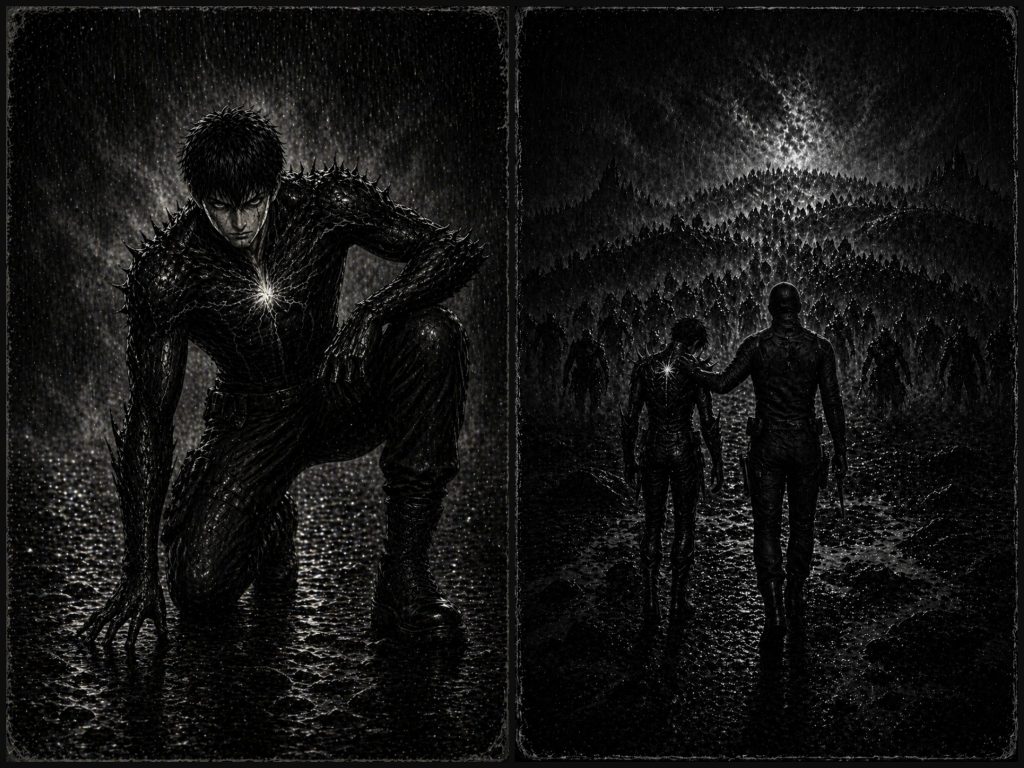
German heads toward him calmly, almost casually, removing anything that gets between them as he goes. Coming up from behind, he places a hand on the boy’s shoulder and says without raising his voice, Good job, kid. We’ll take it from here. Arthur cannot understand what is happening. He had been waiting for his team – restored, ready to return to the fight. Instead there is a stranger in a balaclava beside him, and behind that stranger stands the same chubby guy, already looking past people and straight at the monsters. German catches Arthur’s confusion, assesses his condition in a fraction of a second, and adds in the same even tone, Kid, fall back before you lose your life here. We’ll handle the rest.
Gobby pays no attention to Arthur’s confusion or to anything else around him. He calmly chews the last gummy bear, slips the empty packet into his pocket, and looks at the flow of monsters without expression.
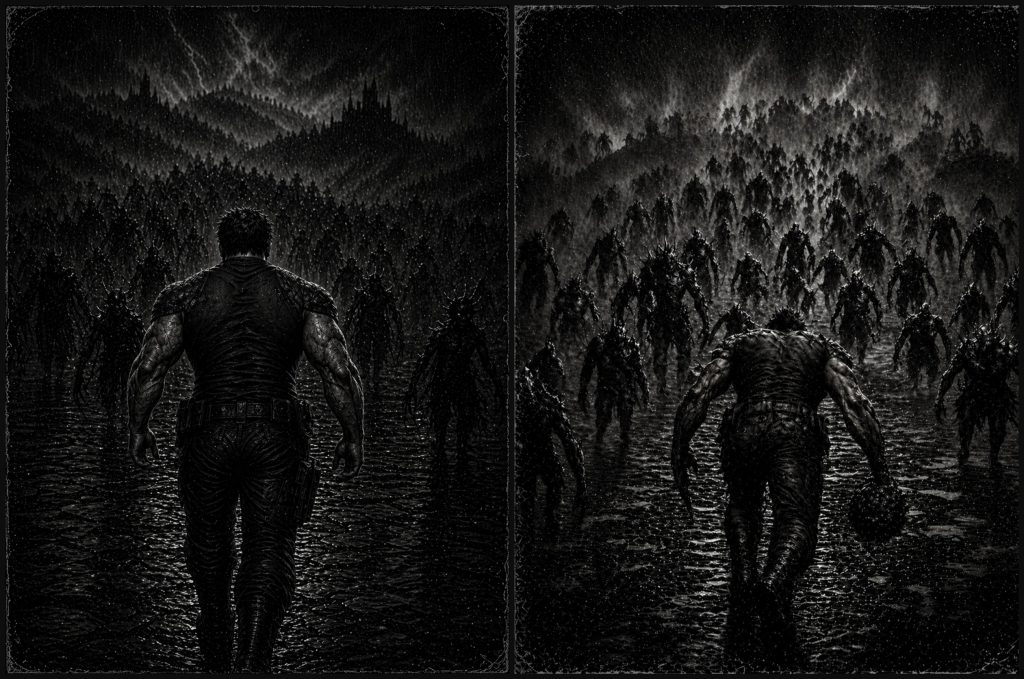
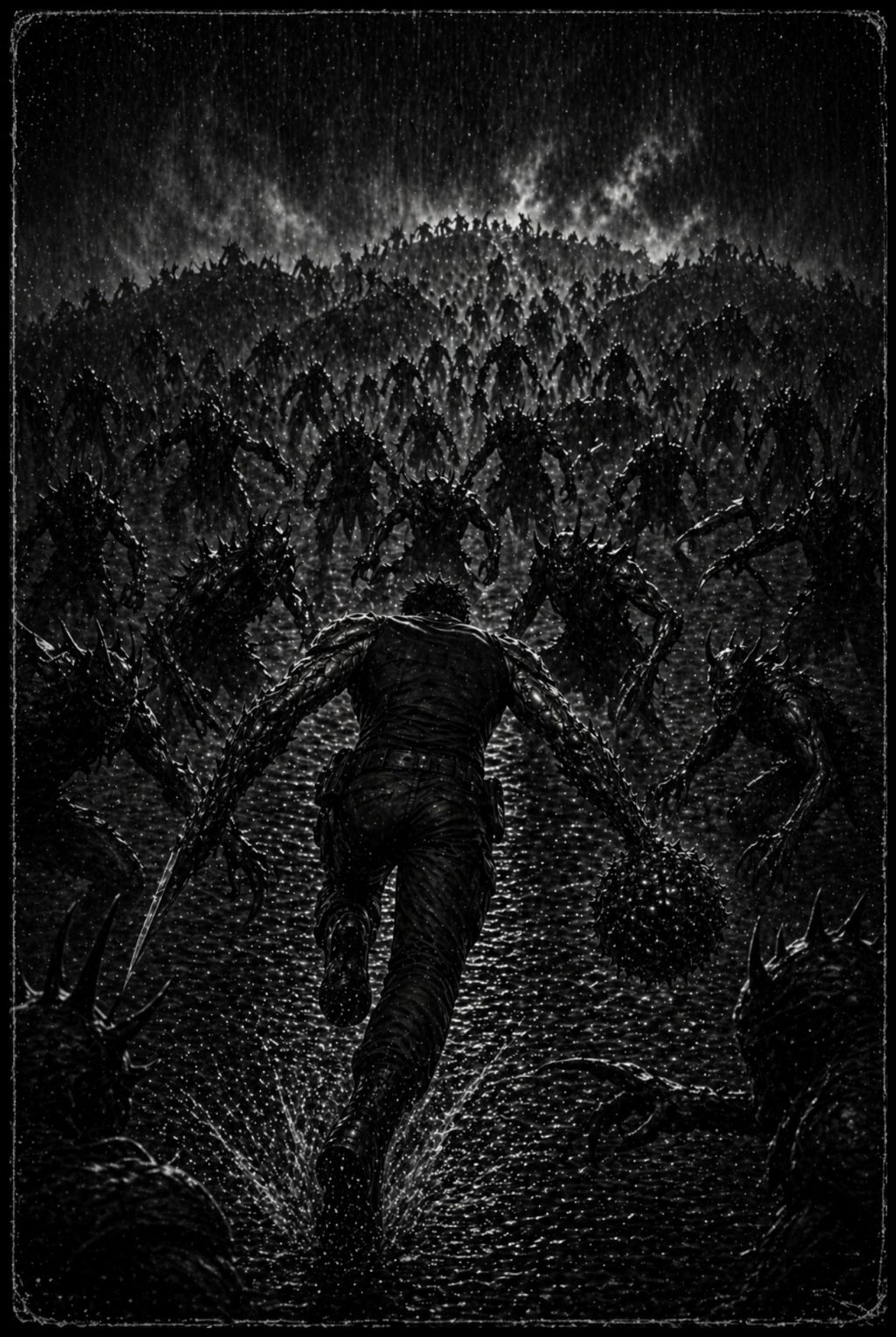
In the next moment, his body enters the first stage of transformation, then the second immediately after it – no pause, no hesitation. Then he bursts forward and crashes into the horde, tearing a path straight through it and leaving behind only torn bodies and empty space.
0 Comments